About

How I ended up here.

Tim Sasseen is a clean energy executive based in Santa Barbara, California. Twenty-seven years across wind, hydrogen, microgrids, and storage. Currently advising American Honda on hydrogen power generation strategy.

29 years
in clean energy, across wind, hydrogen, microgrids, and storage
$16M+
in awarded CEC, CARB, DOE, and OCED grants written or led
50×
growth in the North American fuel cell bus market during his Ballard tenure
3 sectors
served: startups, Fortune 500 OEMs, and government agencies

I started with wind turbines. Designing control systems that had to survive 110 mph gusts and twenty years of fatigue cycles teaches you very quickly that the lab is not the field. The math always works on paper. The hardware has opinions.

From wind I moved into microgrids. That is when I learned the lesson that has shaped every project since: resilience is not a piece of hardware you buy. It is the integration between generation, storage, controls, and the operator on a Sunday night when the grid drops out. Hardware is the easy part.

Then came hydrogen. I joined Ballard expecting it to be another technology development job and discovered the real problem was organizational. The fuel cell worked. The bus worked. What did not work was the space between a manufacturer, a transit operator, a utility, a regulator, and a fuel provider trying to agree on a deployment plan. I spent six years closing that space, and the North American market went from 4 buses a year to over 200.

That is the through-line. The hardest problems in clean energy are organizational, not technical. I am good at navigating the chaos between startups, enterprise OEMs, government agencies, and transit operators, and getting them all moving in the same direction. I do that with hard numbers, written proposals, and showing up to every operator's depot at six in the morning.

After 29 years building clean energy infrastructure, I am always interested in the next hard problem. If you are building something that matters, I would like to hear about it.
The longer version

Four sectors, one through-line.

Early controls work, 1995 to 1997

Tim started as a control system engineer at Sony Disc Manufacturing, building and maintaining the industrial automation that ran high-volume optical media production. Two years of factory-floor controls taught him how real hardware behaves when it has to run a shift, every shift.

Wind and early hydrogen, 1997 to 2008

He joined Southwest Windpower as Director of R&D, leading the redesign of the company's small distributed wind turbines for off-grid homes and telecom sites. In 2000 he moved into hydrogen for the first time, joining Ballard Power Systems and Daimler in control systems engineering and field service management for the early fuel cell vehicle programs. That decade put him on both sides of clean energy hardware, the lab bench and the operator depot.

Utility-scale wind, 2008 to 2014

Tim returned to wind at utility scale as a system integration lead on Clipper Windpower's 2.5 MW Liberty turbine, then served as VP Engineering at Continental Wind Power, then as program manager at Boulder Wind Power for a direct-drive permanent magnet generator program. Six years of large-machine work taught him how to design, certify, and ship products that survive 110 mph gusts and twenty years of fatigue cycles.

Microgrids and storage, 2014 to 2018

As Director of R&D and Interim CTO at CleanSpark, Tim led microgrid control system development for military, commercial, and resilience applications. He then joined the Center for Sustainable Energy as a principal advisor, where he authored two of California's first comprehensive reviews of behind-the-meter battery storage, presented to the California Public Utilities Commission and the U.S. Energy Storage Summit. This is where he learned that resilience is integration, not hardware.

Hydrogen leadership, 2018 to today

At Ballard Power Systems, Tim ran North American market development for six years. When he started, the U.S. fuel cell bus market was roughly four vehicles per year. When he left, it was more than two hundred. He served as Board President of the Western States Hydrogen Alliance, helped pass California SB 662, and testified to the U.S. Treasury Department on the federal 45V hydrogen production tax credit. In 2024 he founded Tim Sasseen New Energy Solutions LLC, an independent energy and critical materials consulting practice, and in 2025 began advising American Honda Motor Company on hydrogen power generation strategy.

Writing and speaking

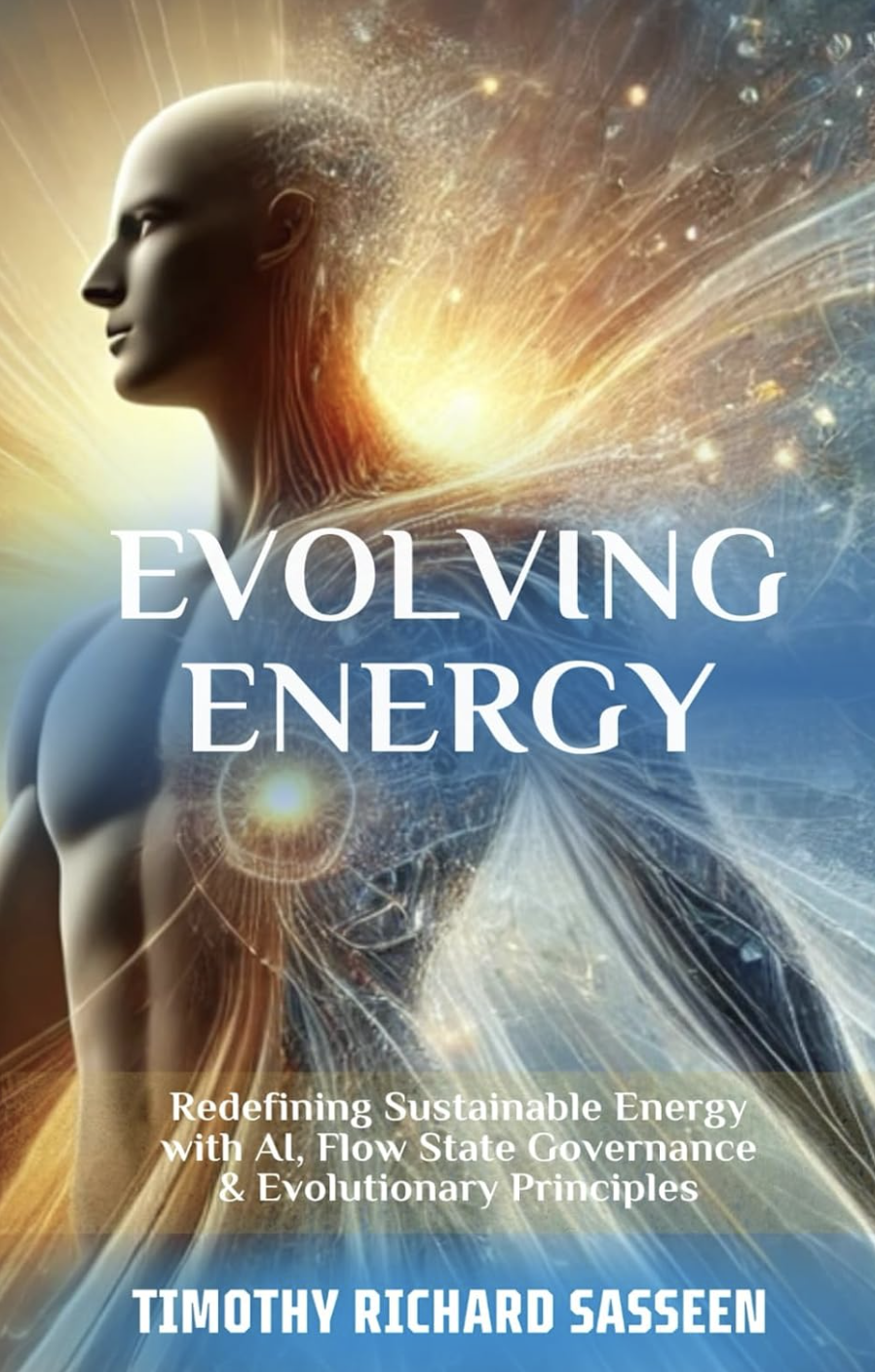
Tim is the author of Evolving Energy, an Amazon Best-Seller on AI, systems governance, and natural principles in clean energy infrastructure. He speaks regularly at industry conferences including APTA, Hydrogen Americas Summit, VerdeXchange, and Zero Emission Bus, and has been interviewed on H2TECH, Transit Unplugged, Climate Champions, and Mass Transit Magazine. See the press page for the full archive.

Cover of Evolving Energy by Timothy Richard Sasseen
Book

Evolving Energy

Redefining innovation in sustainable energy through AI, flow state governance, and natural principles. The book explores how systems thinking and emerging AI tools can reshape how we design, fund, and govern clean energy infrastructure. Amazon Best-Seller.