Innovation

Personal projects, real hardware.

Side builds where Tim pushes the envelope on renewable energy technology in his own shop. Different rules than client work, same engineering rigor.

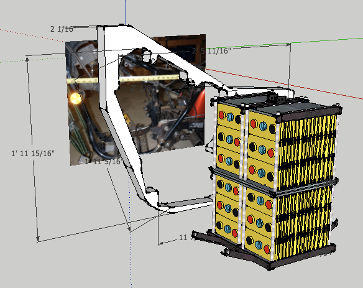
3D CAD model of the custom electric Honda Rebel showing the lithium battery pack mounted in the frame with dimensional callouts
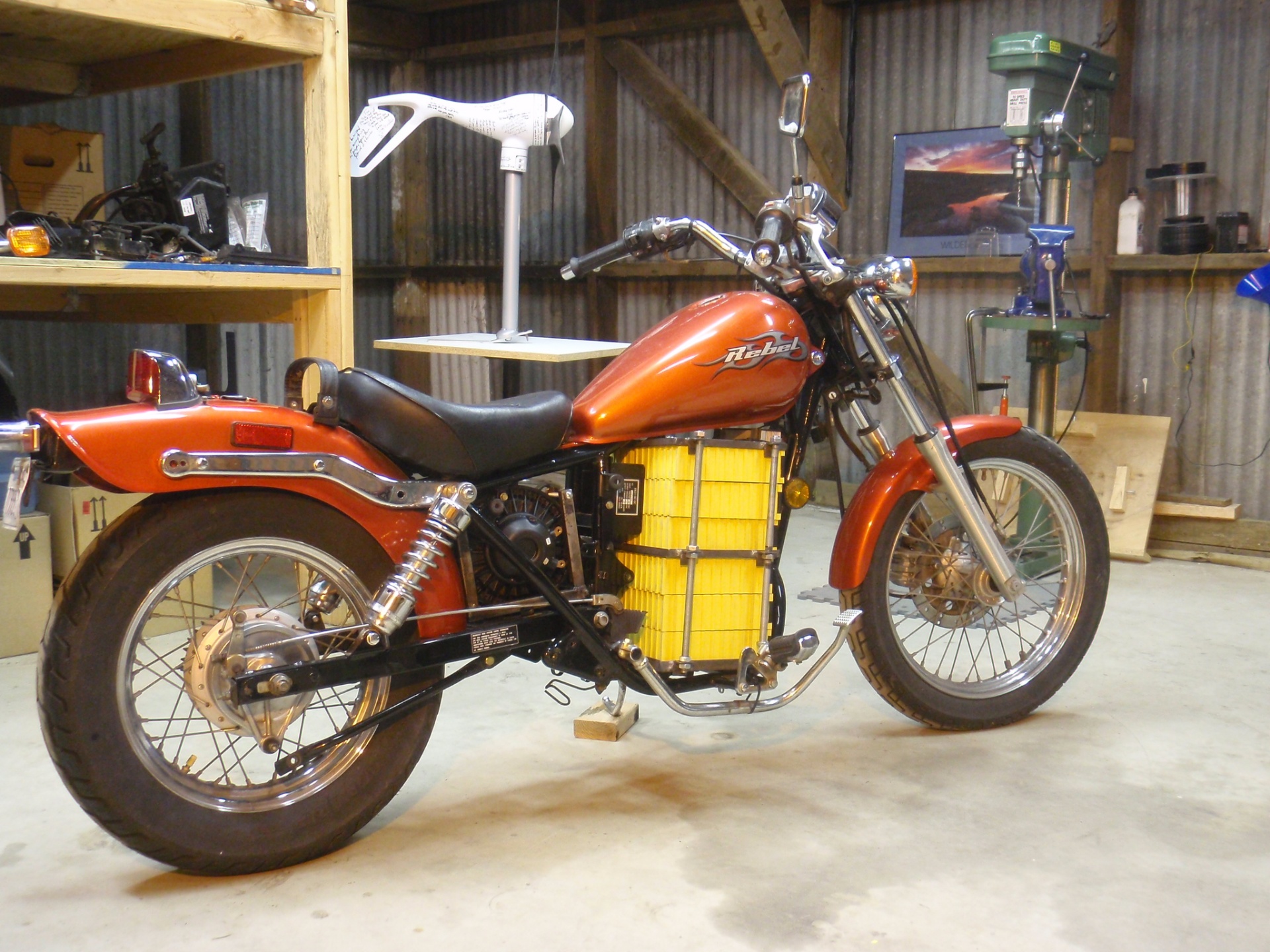
The finished custom electric Honda Rebel in the shop, orange tank and fenders with the yellow lithium battery pack mounted where the gas engine used to be
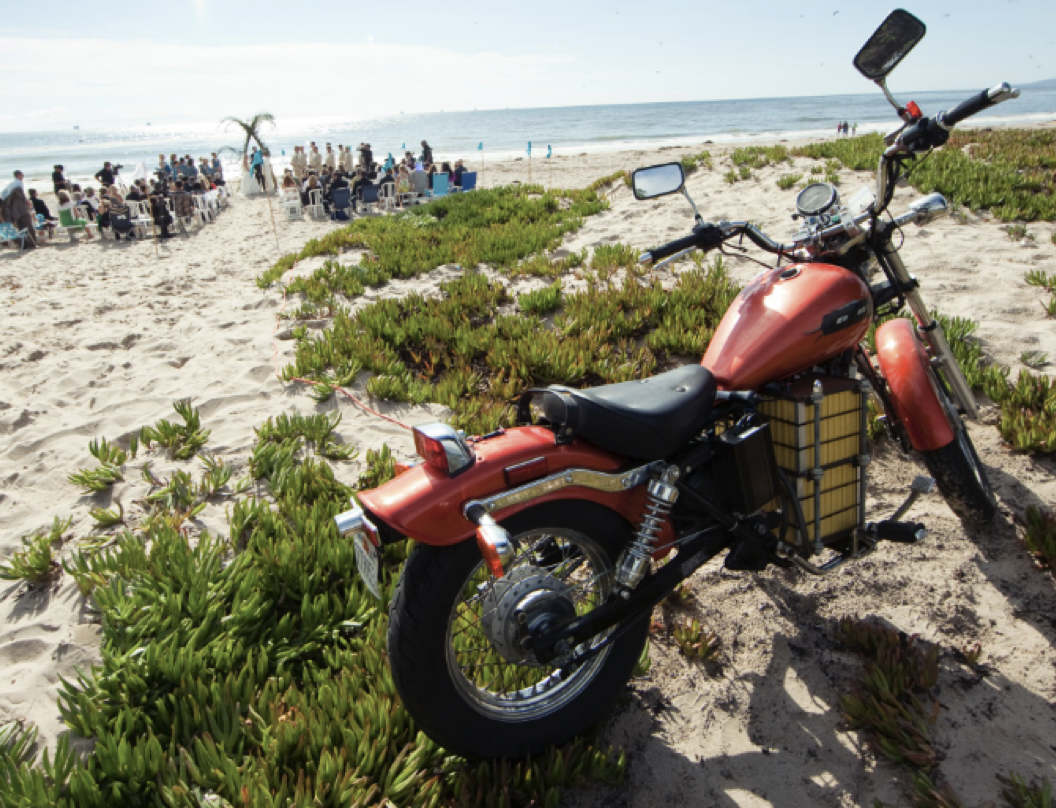
The electric Honda Rebel parked in beach ice plant during Tim and Meredith's wedding ceremony in Carpinteria
Innovation 01
Designer, builder, rider

Off-grid and on-camera: a custom electric Honda Rebel

Personal project, featured on reality TV
Challenge
Take a 250cc gas-burning Honda Rebel and replace its internal combustion engine with a clean, drop-in electric powertrain that still rides like a real motorcycle.
What I did
Designed a custom electric drive package as a direct mechanical replacement for the Rebel's 250cc engine. Built and integrated the motor, battery pack, controller, and charging system by hand in the shop. Tuned the ride for real-world use, not a science fair.
Outcome
A clean, road-ready electric motorcycle that became a personal favorite, served as the off-grid power source for Tim and Meredith's beach wedding in Carpinteria, California, and earned a turn on reality TV.
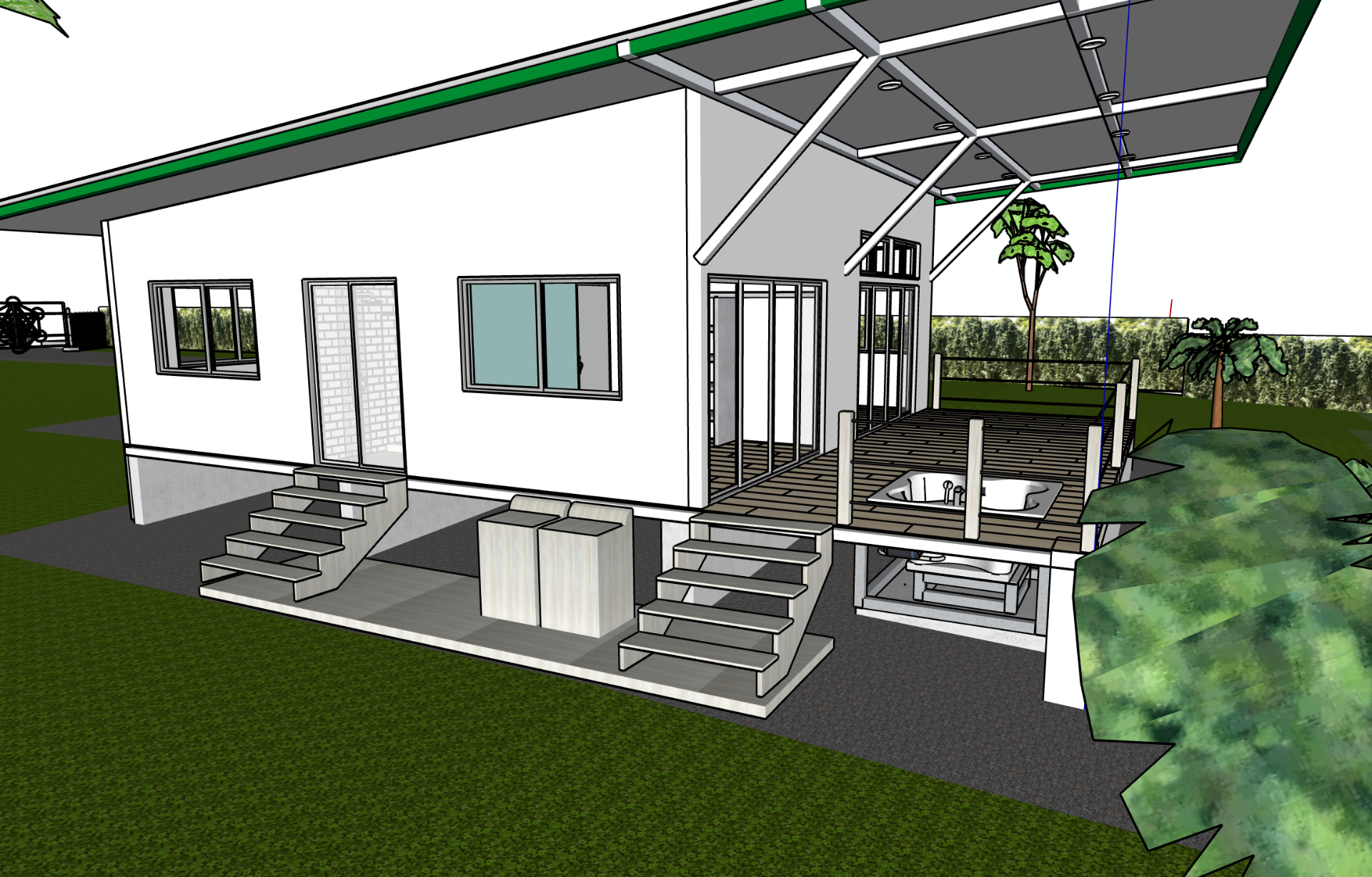
3D model rendering of the Costa Rica house showing the elevated deck, sunken hot tub, and wide overhanging roof
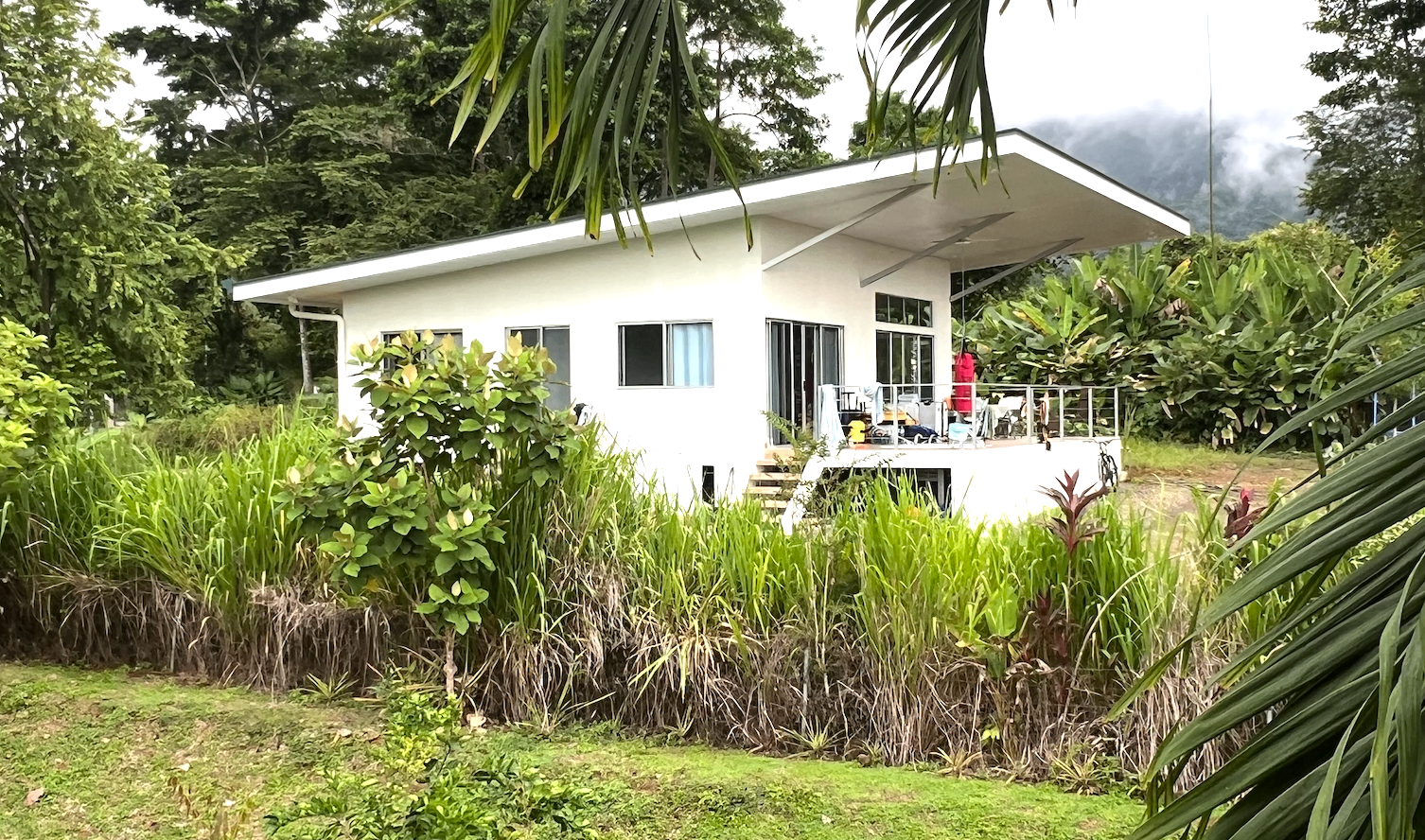
The finished white two-bedroom house in Ojochal, Costa Rica, set into the jungle with a wraparound deck and deep eaves
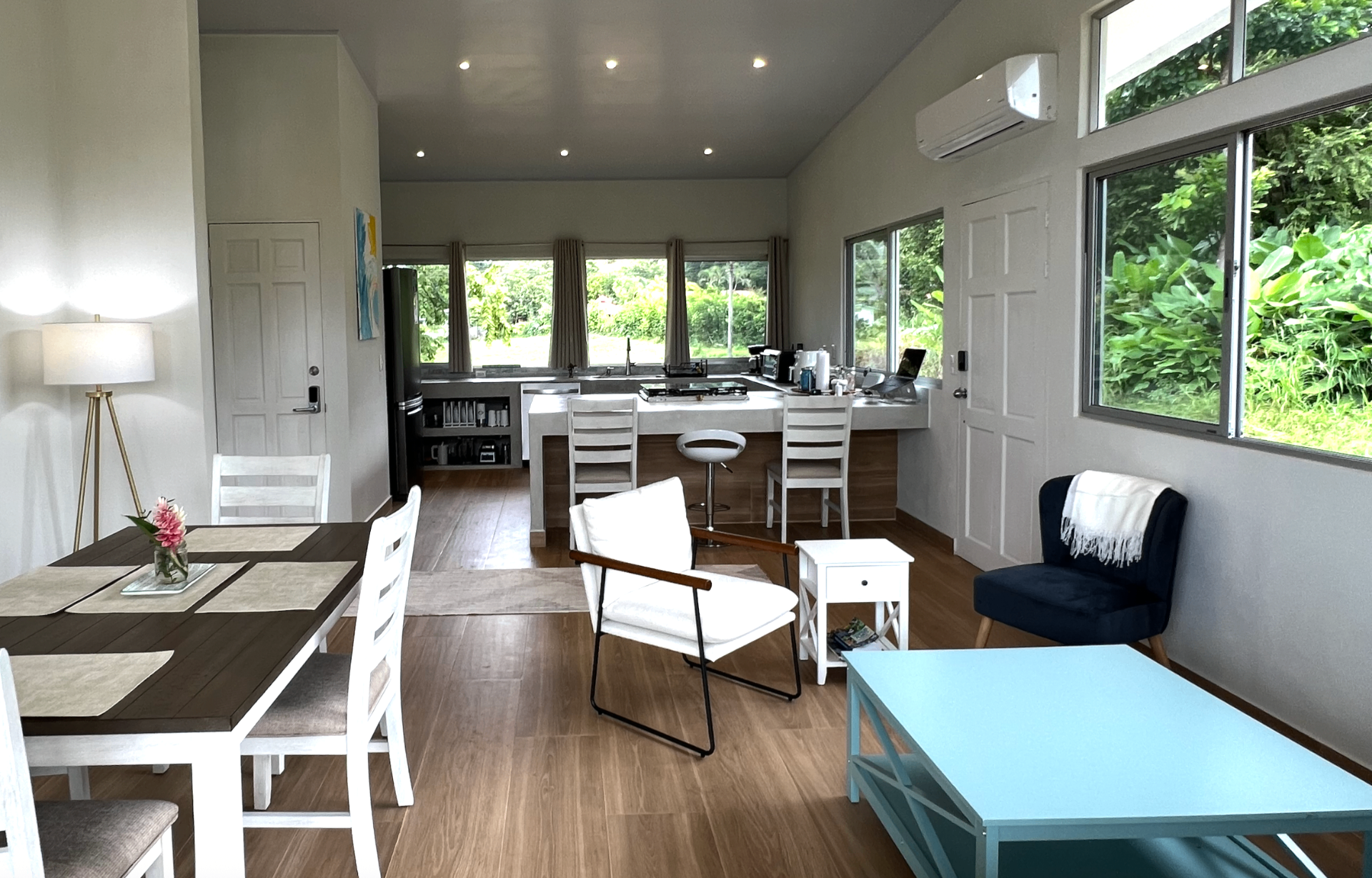
Bright interior of Casa Ojochal with vaulted ceilings, open kitchen and living area, and wide windows looking out into the surrounding jungle
Innovation 02
Designer, owner-builder, general contractor

Casa Ojochal: a self-designed home for the Costa Rican jungle

Personal build, Ojochal, Costa Rica (2022–2023)
Challenge
Build a comfortable, low-maintenance home in a hot, humid jungle climate where mold, rot, and stagnant air defeat conventional construction.
What I did
Designed the two-bedroom layout and structural concept in 3D, then financed and built it on the ground in Ojochal with local crews and locally sourced materials. Elevated the floor plate off the jungle floor and stretched the roof into deep overhangs to drive constant cross-ventilation, shade the walls, and keep the interior dry. Wrapped the living space with an expansive deck and dropped a hot tub straight into the decking.
Outcome
A finished home that breathes with the climate instead of fighting it: airy interiors, almost no mold pressure, deep shaded outdoor living, and a build completed in 2022–2023 with a local team.
Watch the model and build time-lapse on YouTube
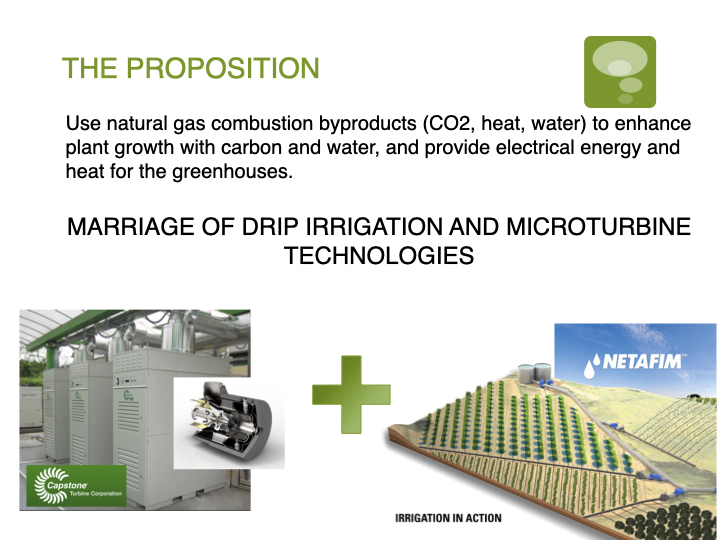
Natural Garden proposition slide pairing a Capstone microturbine with a Netafim drip irrigation field
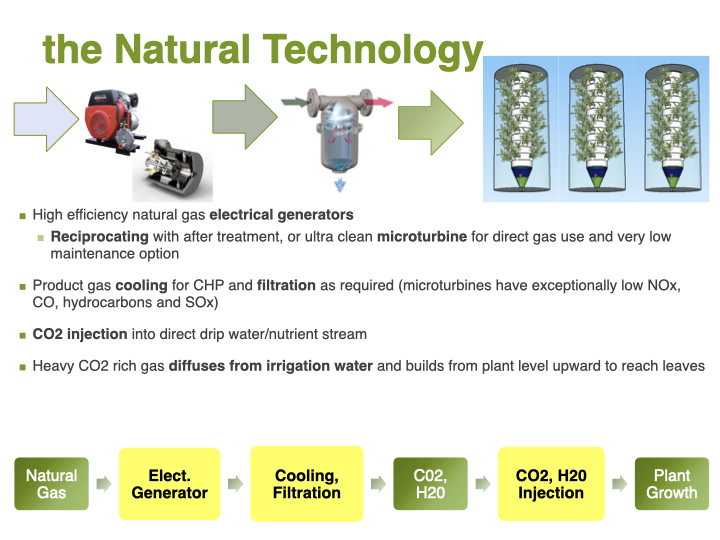
Process diagram for the Natural Garden system: natural gas to generator, cooling and filtration, CO2 and water injection, plant growth
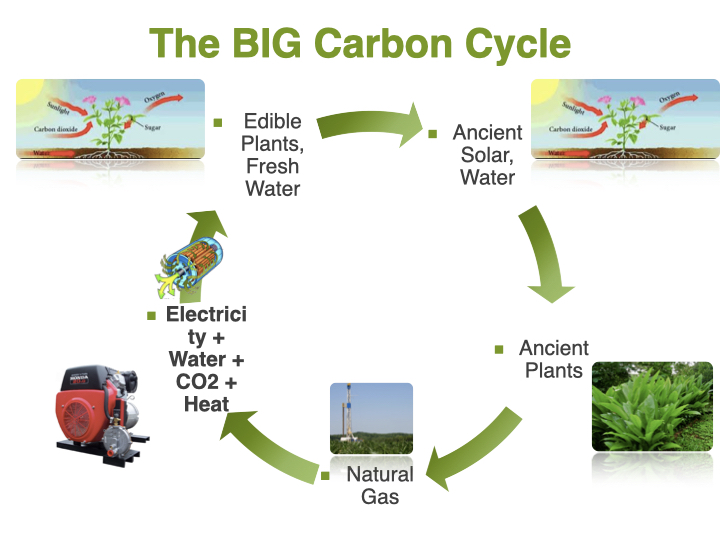
The Big Carbon Cycle diagram tying ancient plants and natural gas back into edible plants, fresh water, and electricity
Innovation 03
Concept lead, systems designer

Natural Garden: turning natural gas into food, water, and power

Personal R&D concept pitch
Challenge
Natural gas combustion is usually treated as pure waste. Its exhaust is mostly CO2 and water vapor, the exact inputs plants need to grow.
What I did
Designed a closed-loop concept that pairs a high-efficiency natural gas generator with a hydroponic or drip irrigation network. Cooled and filtered exhaust feeds CO2 and warm water directly into the root zone, while electricity and heat run the greenhouse. Worked out a 10kW reference system producing 566 lbs of CO2, 19 gallons of water, and 1.2M BTU of heat per day at roughly $0.15/kWh.
Outcome
A pitched concept for grove and greenhouse operators to cut water use, sequester carbon into edible plant matter, and turn a fuel bill into food, water, heat, and power from one piece of equipment.
Watch the Natural Garden pitch on YouTube
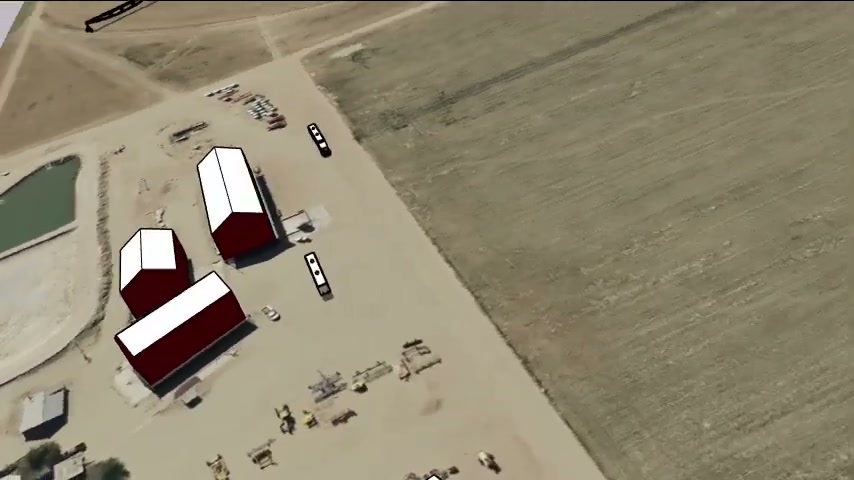
Aerial concept rendering of the Agrivoltaic Hydropivot system, a solar-panel-clad center-pivot irrigation arm sweeping across a circular farm field
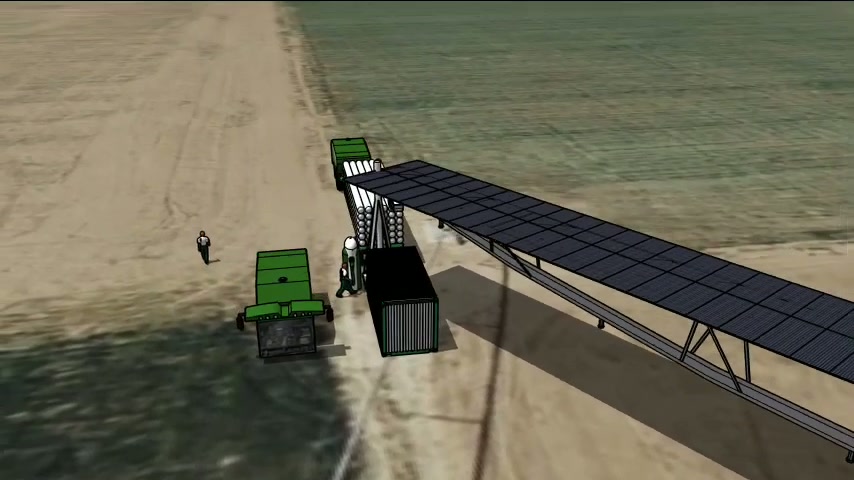
Detail view of the seven reinforced inverted center-pivot segments carrying solar panels above the crop canopy
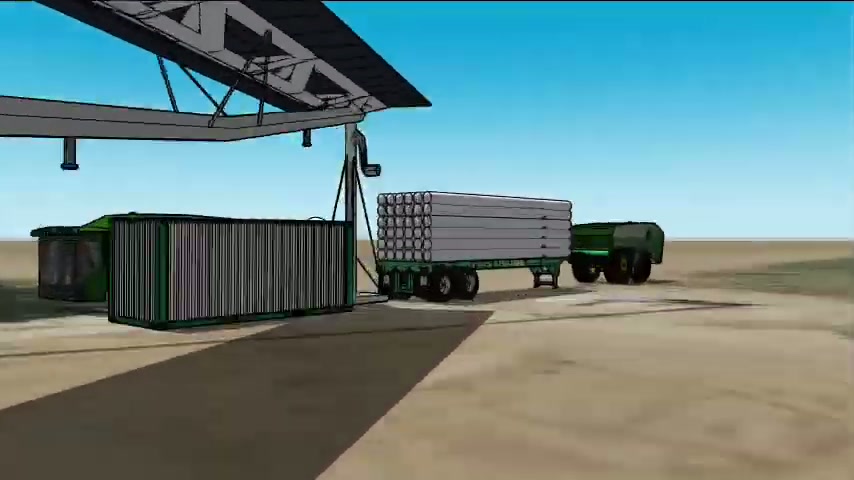
Proposed hydrogen fuel cell version of the John Deere SESAM 2 electric tractor refueling from the Hydropivot's on-site hydrogen storage
Innovation 04
Concept lead, systems designer

Agrivoltaic Hydropivot: a center-pivot that grows crops and hydrogen fuel

Personal concept design
Challenge
Farms need three things at once: clean electricity, irrigation, and zero-emission fuel for heavy equipment. Today they buy each one separately, and diesel still runs the tractor. States are starting to catch up, Virginia just defined agrivoltaics in law to expand solar on working farmland, which opens the door for systems that do all three jobs at once.
What I did
Designed a hydrogen-producing twist on standard center-pivot irrigation. Seven custom segments form an inverted, reinforced pivot built to carry 2x to 3x the normal weight (6,000 to 10,000 lb), with a 1,280 ft irrigation radius wrapped in solar panels. Around 1,500 kWh per day of on-pivot generation drives an electrolyzer that produces 30 kg of hydrogen per day, stored and dispensed on-site at low pressure for mobile refueling. Two pivots together fuel a full day of work for a proposed fuel cell version of John Deere's SESAM 2 electric tractor, while the pivot keeps doing its day job of watering the field.
Outcome
A single piece of farm infrastructure that irrigates crops, generates clean power, and produces and dispenses the hydrogen needed to run the tractor that works the same field.
Watch the Agrivoltaic Hydropivot concept on YouTube